

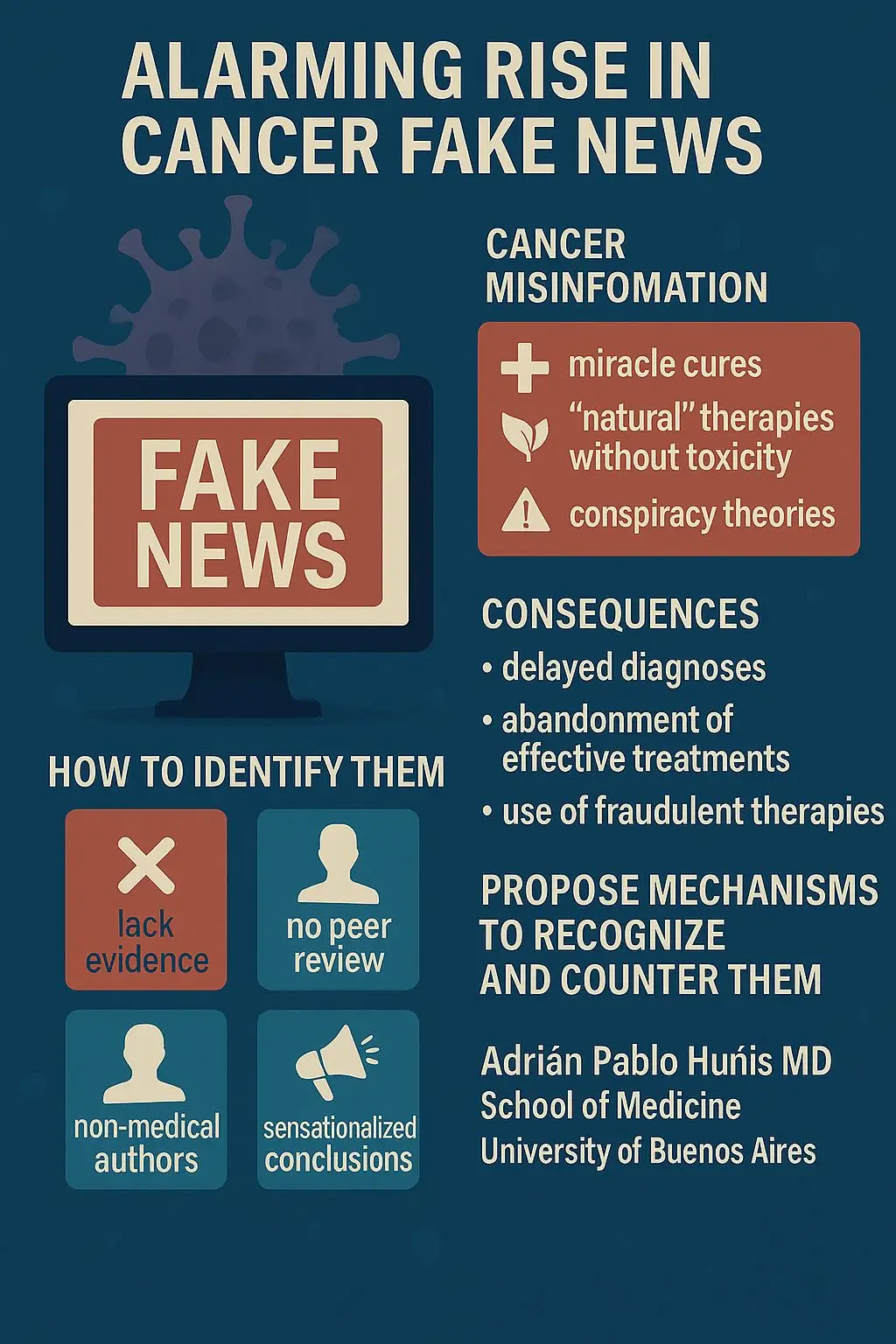
A comprehensive analysis of the alarming rise in fake cancer-related publications, exploring how misinformation spreads, its risks to patients, and practical criteria to identify deceptive content. Learn about evidence-based oncology, quackery, ethical responsibilities, and legal implications.
Alarming Increase in Fake Cancer-Related Publications
 |
|
Adrián Pablo Huñis MD |
|
School of Medicine |
|
University of Buenos Aires (UBA) |
|
Emeritus Member, ASCO |
|
Emeritus Member, ESMO |
|
Honorary Member, AMA |
|
|
A) Abstract
In recent years, there has been a remarkable rise in the number of cancer-related articles, notes, and publications produced by individuals with no medical or scientific training. These texts typically promise miracle cures, promote “natural” therapies without toxicity, propose substitutes for chemotherapy, and circulate conspiracy theories about modern oncology. Most lack evidence, methodology, peer review, and clinical grounding, generating false information that spreads quickly through media and social networks.
Oncologic misinformation leads to delayed diagnoses, abandonment of effective treatments, and the consumption of fraudulent therapies, with potentially fatal consequences. This article analyzes the phenomenon, defines what constitutes a true scientific publication, reviews the concept of evidence, describes cancer-related quackery, presents indicators for identifying deceptive content, examines the responsibilities of authors, editors, and scientific societies, and analyzes the legal implications of such practices. Tables, conceptual figures, and numbered references are included.
B) Introduction
Contemporary oncology is supported by a robust body of knowledge derived from molecular biology, clinical trials, translational research, and evidence-based medicine. However, the public space has become flooded with non-scientific content produced by laypersons, influencers, amateur communicators, and sellers of alternative therapies.
The proliferation of these publications is driven by multiple factors:
- High visibility of cancer, a topic that triggers deep fears among the general population.
- Emotional vulnerability of patients seeking hope when facing complex diagnoses.
- A social-media ecosystem where virality outweighs accuracy.
- Commercial interests exploiting the market for supplements, “detox therapies,” courses, seminars, and supposedly anticancer products.
A recent analysis found that nearly one-third of popular cancer-related content on social media contains false information, and over 75% includes potentially harmful messages (1). Misinformation has become a real clinical problem. Many oncologists report cases of patients who discontinued effective therapies after being influenced by deceptive online promises.
This phenomenon requires a clear, evidence-based, and educational response. The purpose of this work is to provide a comprehensive and rigorous analysis of the problem, offering practical criteria to identify fraudulent content and tools to help professionals, editors, and scientific societies counter the advance of quackery.
C) Objectives
General Objective
To analyze the rise of fake cancer-related publications written by non-medical authors, describe their characteristics and consequences, and propose mechanisms to recognize and combat them.
Specific Objectives
- Define what constitutes a legitimate scientific publication.
- Explain the concept and hierarchy of scientific evidence.
- Describe modern forms of cancer-related quackery.
- Analyze the social impact of consuming false information.
- Propose practical criteria to detect deceptive content.
- Review the ethical responsibilities of authors and editors.
- Define the role of scientific societies in addressing this issue.
- Analyze the legal implications of disseminating fraudulent information.
- Include tables, figures, and conceptual diagrams useful for teaching and communication.
D) What Is Considered a Scientific Publication?
A genuine scientific publication is not simply a “health-related text”; it is the documented result of a systematic process. To be considered scientific, it must meet several criteria.
1. Essential Requirements
a. Clear clinical or scientific question
The publication must explicitly state the problem it seeks to address: treatment efficacy, toxicity, survival, biomarkers, etc.
b. Rigorous methodology
Including:
- Study design
- Population description
- Inclusion and exclusion criteria
- Statistical methods
- Primary and secondary endpoints
c. Verifiable and reproducible data
Results must be reviewable, reinterpretable, and comparable with other studies.
d. Peer review
Independent experts evaluate methodology, results, consistency, and conclusions prior to publication.
e. Ethical transparency
Ethics committee approval, informed consent, clinical trial registration, and conflict-of-interest disclosure.
f. Publication in recognized journals
Indexed journals with clear guidelines, editorial boards, and retraction mechanisms.
2. In Contrast: Fake Publications
Pseudoscientific notes:
- Lack methodology.
- Present no verifiable data.
- Undergo no expert review.
- Conceal conflicts of interest.
- Exaggerate conclusions or invent “discoveries.”
Table 1. Scientific Publications vs. Fraudulent Notes
| Characteristic | Scientific Publication | Fake / Quack Note |
| Clinical question | Clear, precise | Vague or absent |
| Methodology | Detailed | Nonexistent |
| Peer review | Mandatory | Absent |
| Datos | Real, verifiable | Testimonies or fabrications |
| Conflict of interest | Declared | Hidden |
| Objective | Inform, advance knowledge | Sell, mislead, generate clicks |
E) What Is Scientific Evidence?
Scientific evidence is the body of knowledge derived from studies designed to answer clinical questions with minimal bias.
1. Evidence Hierarchy
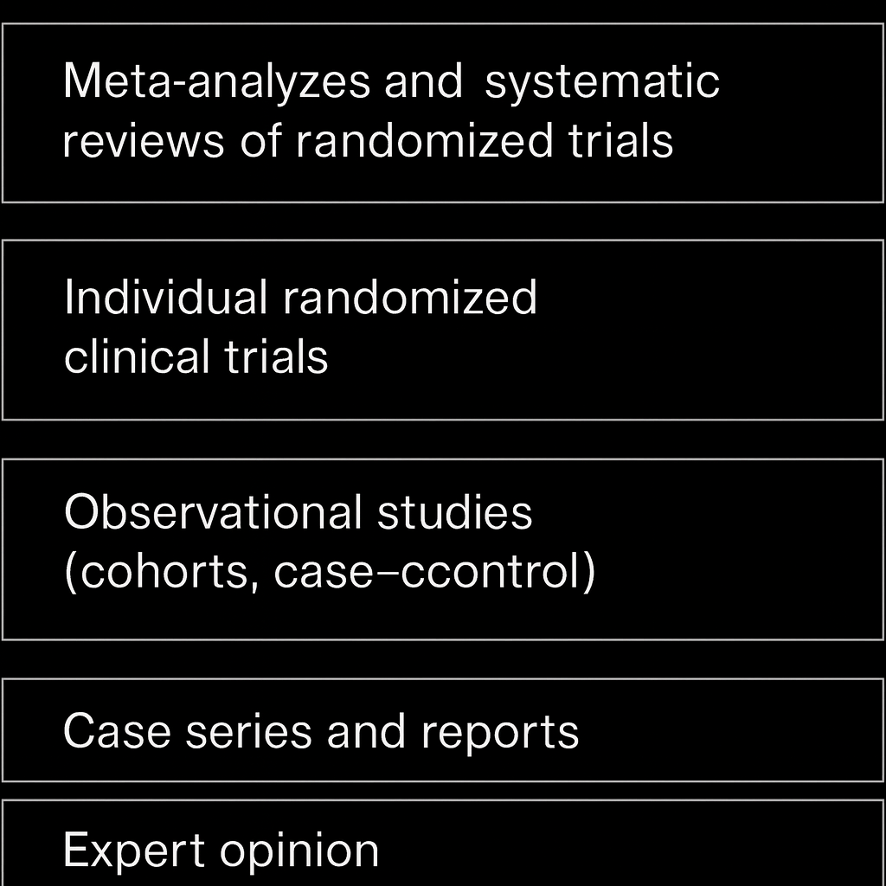
- Systematic reviews and meta-analyses
- Randomized clinical trials
- Observational studies (cohort, case-control)
- Case series
- Expert opinion
- Anecdotes, testimonials (not evidence)
2. Evidence vs. Testimony
Many quack practitioners rely on “success stories”:
“My aunt cured herself with carrot juice.”
“Someone stopped chemotherapy and is now healthy.”
Emotional testimony can never replace scientific evidence.
3. Example of a Proper Approach
The work “Complementary and Alternative Medicines for Cancer” by Turek and Hunis (2) clearly differentiates:
- Potentially useful complementary therapies
- Ineffective practices
- Dangerous interventions
- Strategies without evidence
This is the correct model: study, classify, and protect patients.
F) Quackery and Cancer
Quackery encompasses practices that promise to cure cancer without evidence, using emotional rhetoric.
1. Modern Modalities
- “Natural healers”: diets, enemas, detox regimens, megavitamin doses
- Influencers discrediting chemotherapy while promoting miracle supplements
- Unregulated foreign centers selling “secret protocols”
- “Anticancer products” without regulatory approval
2. Rhetorical Strategies
- Absolute promises
- Pseudoscientific language (“alkalinization,” “quantum energy”)
- Discrediting oncologists
- Conspiracy theories (“the pharmaceutical industry doesn’t want you to know”)
3. Typical Recruitment Cycle
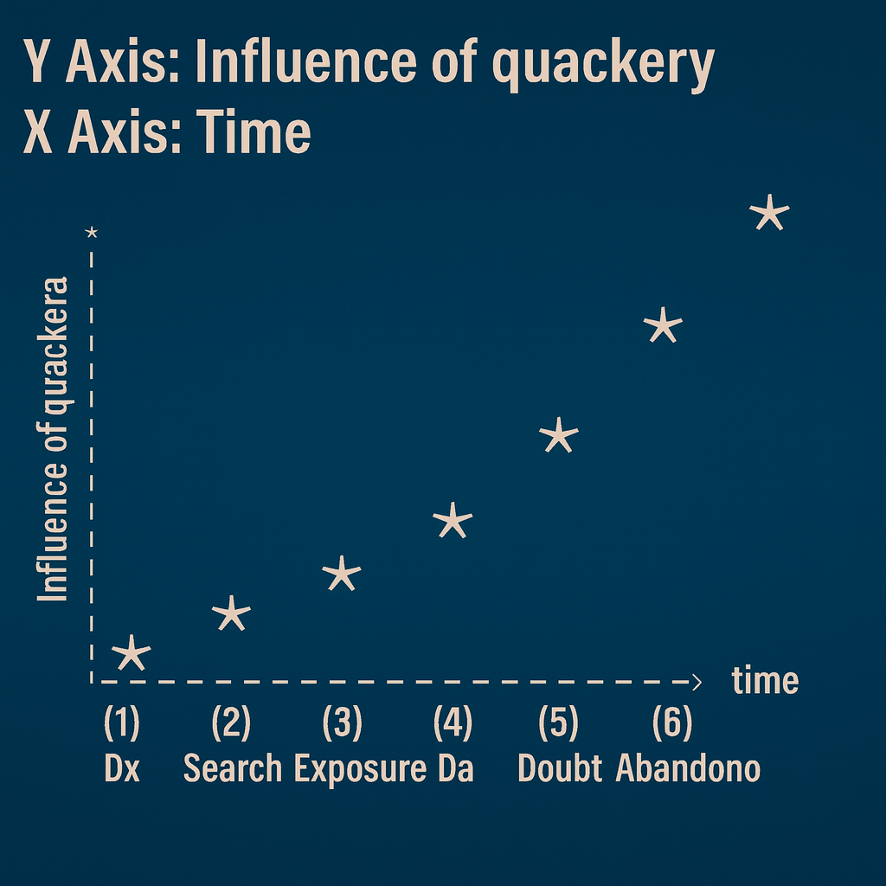
Diagnosis → Emotional shock → Treatment start → Online search → Exposure to quack content → Doubts about the physician → Fraudulent therapy consumption → Treatment abandonment → Tumor progression
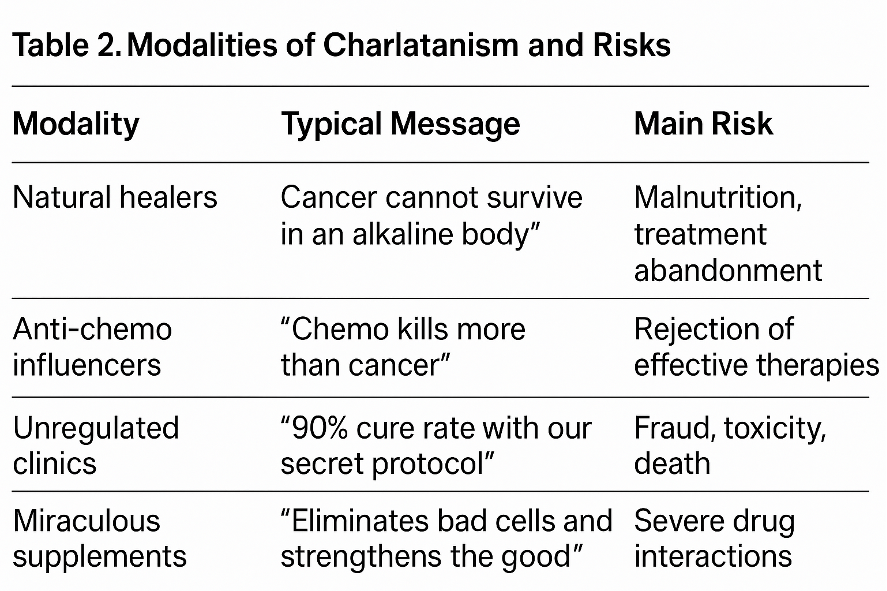
Table 2. Modalities of Charlatanism and Risks
Modality
- Natural healers
- Anti-chemo influencers
- Unregulated clinics
- Miraculous supplements
Typical Message
- “Cancer cannot survive in an alkaline body”
- “Chemo kills more than cancer”
- “90% cure rate with our secret protocol”
- “Eliminates bad cells and strengthens the good”
Main Risk
- Malnutrition, treatment abandonment
- Rejection of effective therapies
- Fraud, toxicity, death
- Severe drug interactions
G) The Reach of False Information
The magnitude of the problem is significant:
- 33% of viral cancer-related information online is false (1).
- 75% of false content is potentially dangerous (1).
- 70–80% of patients search for information online (3).
- Sensationalist content spreads much more than scientific information (4).
Figure 3. Conceptual Misinformation Funnel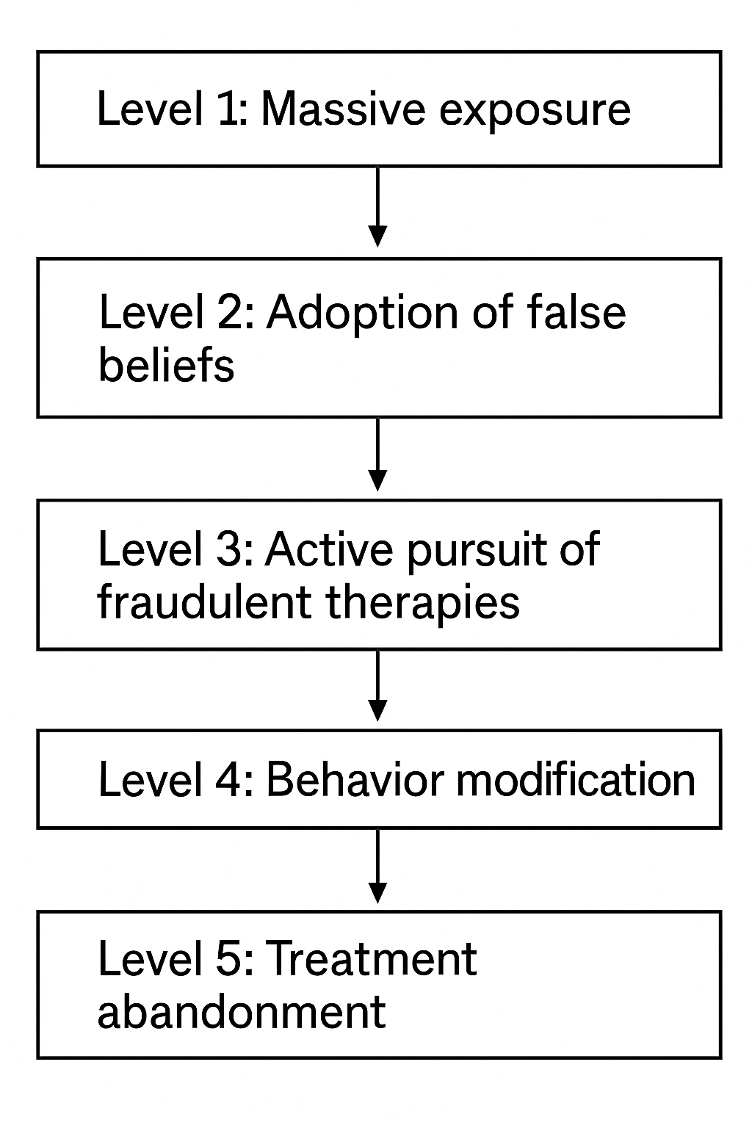
Stage 1 — Casual Exposure
Patient encounters a post or video claiming a “natural cure.”
Stage 2 — Partial Belief Adoption
Begins to distrust conventional treatment.
Stage 3 — Contact with Fraudulent Provider
Seeks more videos, books, or online consultations.
Stage 4 — Behavioral Change
Reduces doses, delays tests, or introduces dangerous supplements.
Stage 5 — Full Treatment Abandonment
Critical decision based on false promises.
Stage 6 — Tumor Progression / Loss of Opportunity
Direct consequence.
H) How to Identify a Fake Article?
1. Clear Warning Signs
Uses absolute terms (“definitive cure”).
Claims medicine is hiding something.
Provides no studies or journal citations.
Relies solely on testimonies.
Discredits oncologists.
Sells supplements or courses.
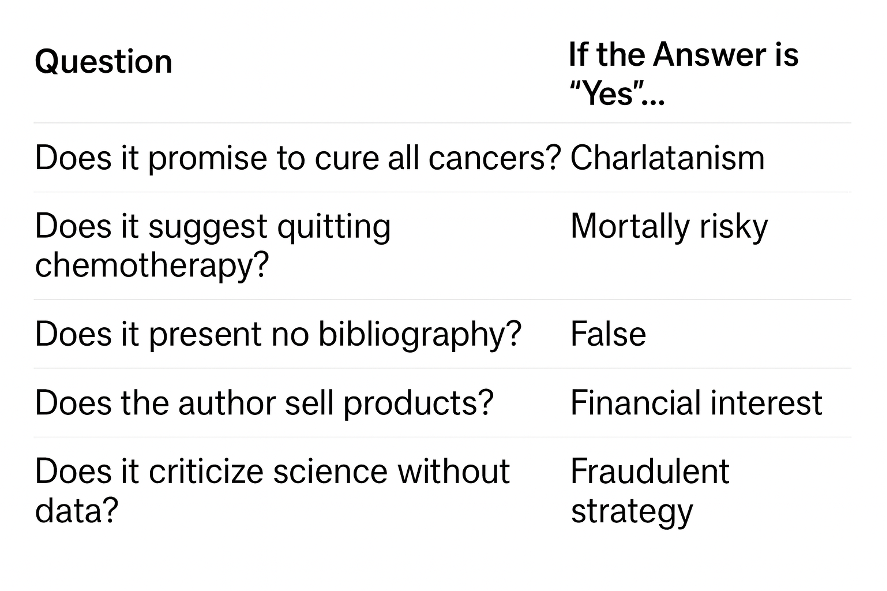
2. Practical Checklist
Table 3. Critical-Reading Checklist
I) Author Responsibility
Anyone writing about cancer has a moral obligation not to cause harm. Minimum responsibilities include:
- Being honest about the limits of their knowledge.
- Not presenting personal theories as facts.
- Avoiding recommendations of therapies without evidence.
- Declaring commercial interests.
An author who induces therapeutic abandonment shares responsibility for the resulting harm.
J) Editor Responsibility
Editors serve as a critical filter.
They must:
- Require professional review of health-related content.
- Avoid publishing sensationalist material.
- Correct inaccuracies.
- Avoid misleading advertising for unproven therapies.
An irresponsible editor amplifies misinformation.
K) Responsibility of Scientific Societies
Scientific societies must:
- Issue statements debunking false cancer-related claims.
- Create accessible patient-education materials.
- Train journalists in medical information handling.
- Support professionals combating misinformation.
- Collaborate with health authorities to sanction fraudulent practices.
Institutional silence only benefits the quack practitioner.
L) Legal Implications
1. Illegal Practice of Medicine
Occurs when someone without proper credentials recommends, replaces, or prescribes treatments.
2. Misleading Advertising
Promising cures violates consumer-protection laws.
3. Civil Liability
Applies when therapeutic abandonment is proven to be induced by false information.
4. Criminal Liability
In cases of severe harm or death attributable to fraudulent advice.
Ll) Conclusions
- Fake cancer-related publications are a public-health problem.
- They rely on emotion, not evidence.
- They induce dangerous behaviors and treatment abandonment.
- Scientific evidence is the only valid basis for clinical decision-making.
- Quackery exploits fear and vulnerability.
- Authors, editors, and societies have irreplaceable roles.
- Clinical consequences can be fatal.
- Health education is essential to counter misinformation.
- Confronting “cancer healers” is an ethical duty.
M) References
Johnson SB, Park HS, Gross CP, Yu JB. Cancer misinformation on social media. J Natl Cancer Inst. 2022;114(7):1036–1040.
https://doi.org/10.1093/jnci/djac029
Turek A, Hunis AP. Complementary and Alternative Medicines for Cancer. School of Medicine, University of Buenos Aires; Buenos Aires, Argentina.
https://www.onlinescientificresearch.com/articles/complementary-and-alternative-medicines-for-cancer.html
Chou WS, Oh A, Klein W. Addressing health-related misinformation on social media. JAMA. 2018;320(23):2417–2418.
https://doi.org/10.1001/jama.2018.16865
Loeb S, Sengupta S, Butaney M, et al. Dissemination of cancer-related misinformation on social media. CA Cancer J Clin. 2020;70(1):1–12.
https://doi.org/10.3322/caac.21525
Delgado-López PD, Corrales-García EM. Influence of internet and social media in alternative oncology. World Neurosurg. 2018;112:275–284.
https://doi.org/10.1016/j.wneu.2018.01.032
Swire-Thompson B, Lazer D. Public health and online misinformation. Annu Rev Public Health. 2020;41:433–451.
https://doi.org/10.1146/annurev-publhealth-040119-094127
Zarocostas J. How to fight an infodemic. Lancet. 2020;395:676.
https://doi.org/10.1016/S0140-6736(20)30461-X
León SA. Fake medical news and cancer. Lancet Oncol. 2020;21:e58–e65.
https://doi.org/10.1016/S1470-2045(19)30826-8
Federal Trade Commission. Bogus cancer cures: enforcement actions. Washington (DC): FTC; 2008.
https://www.ftc.gov/news-events/topics/truth-advertising/bogus-cancer-cures
U.S. Food and Drug Administration. Products claiming to cure cancer. FDA; 2017.
https://www.fda.gov/consumers/health-fraud-scams/products-claiming-cure-cancer
BLOG COMMENTS POWERED BY DISQUS