


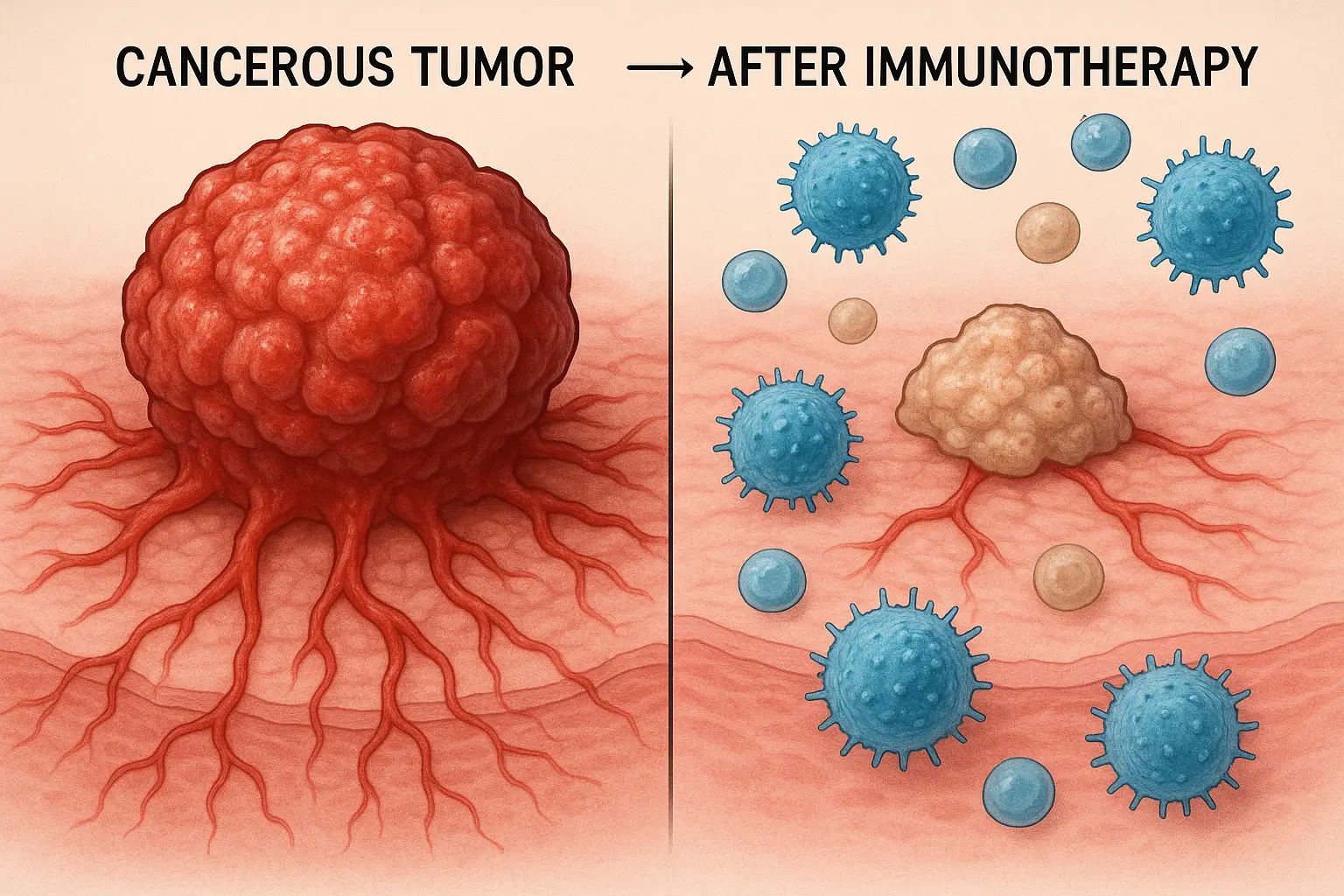
CAR-Macrophages are redefining cancer immunotherapy by targeting solid tumors, remodeling the tumor microenvironment, and boosting immune response.

Alexander Padron

José García
CAR-Macrophages: The Future Nemesis of Solid Tumors
Over the past decade, CAR-T cell therapy has revolutionized the treatment of hematologic malignancies, achieving complete remission rates exceeding 90% in B-cell leukemia. However, its success has been limited in solid tumors, where the hostile tumor microenvironment (TME), poor infiltration, and systemic toxicities such as cytokine release syndrome (CRS) remain major hurdles. (1)
In response, researchers have turned toward alternative immune cell platforms — including natural killer (NK) cells, γδT cells, and macrophages — to extend CAR technology’s reach beyond blood cancers. Among them, CAR-macrophages (CAR-M) have emerged as one of the most promising next-generation cellular therapies. (1,2)
1. What Makes CAR-Macrophages Different?
Macrophages are key orchestrators of the immune system, responsible for phagocytosis, cytokine secretion, and antigen presentation. Within the TME, they exist predominantly as tumor-associated macrophages (TAMs) — often polarized toward an immunosuppressive M2 phenotype that supports angiogenesis and tumor growth. (3)
By genetically engineering macrophages to express chimeric antigen receptors (CARs), scientists aim to reprogram these cells into tumor-fighting agents (M1 phenotype) capable of direct tumor clearance and immune reactivation.
CAR-M therapy enhances macrophages’ ability to:
- Recognize and engulf tumor cells via CAR-targeting,
- Secrete pro-inflammatory cytokines such as IL-12 and TNF-α,
- Recruit and activate T cells, NK cells, and dendritic cells,
- Remodel the TME, transforming it from “cold” (immune-silent) to “hot” (immune-active). (3,4)
2. Research and Clinical Progress
While still in early stages, preclinical data show strong anti-tumor efficacy of CAR-M cells in both hematological and solid cancers. CD19-targeting CAR-MΦ have demonstrated the ability to specifically engulf CD19⁺ cells, while HER2-directed CAR-M cells (CT
Ongoing clinical trials include:
| Trial Code | Target Antigen | Phase | Highlights/Disease |
| NCT04660929 | HER2 | I | First-in-human HER2-CAR-M trial (CT-0508); well-tolerated, tumor infiltration observed Breast Cancer, Gastric Cancer, Esophageal Cancer |
| NCT06224738 | HER2 | I | Focused on hepatocellular carcinoma; assessing safety and tumor remodeling |
| NCT05164666 | Mesothelin | I | Targeting mesothelioma and pancreatic cancer |
| NCT05007379 | Multiple (ex vivo) | Preclinical | Evaluating in vitro tumor phagocytosis and cytokine profiling |
In these studies, CAR-M cells exhibited robust tumor infiltration, reduced tumor-associated collagen, and enhanced T cell recruitment — outcomes rarely achieved by CAR-T or CAR-NK therapies. (5)
3. Advantages of CAR-M Therapy (3,6,7)
| Advantage | Mechanism | Clinical Implication |
| Deep tumor infiltration | Natural tropism to TME and secretion of matrix metalloproteases (MMPs) | Overcomes one of CAR-T's main limitations |
| TME remodeling | Polarization of M2→M1 macrophages and cytokine release | Converts immunosuppressive microenvironment into pro-inflammatory one |
| Antigen presentation | Interaction with T and NK cells via antigen presentation | Promotes systemic anti-tumor immunity |
| Allogeneic potential | Low risk of GvHD, no MHC matching needed | Enables "off-the-shelf" universal CAR-M products |
| Safety profile | No severe CRS or neurotoxicity observed | Safer alternative to CAR-T therapy |
4. Challenges and Potential Solutions (3,6-10)
Despite its promise, several technical and biological challenges must be addressed before CAR-M can become a mainstream therapy.
1. Limited cell availability:
Primary macrophages are scarce and do not proliferate in vitro. Current solutions include induced pluripotent stem cell (iPSC)-derived macrophages and monocyte differentiation protocols for scalable production.
2. Gene transduction efficiency:
Macrophages are resistant to viral transduction. The use of adenoviral vectors (Ad5f35) has shown higher efficiency while preserving cell phenotype.
3. Migration and biodistribution:
CAR-M cells tend to accumulate in the liver and lungs. Optimizing infusion routes and pre-conditioning regimens could improve tumor localization.
4. CAR design optimization:
CAR constructs tailored to T cells may not fully activate macrophages. New CAR scaffolds with macrophage-specific signaling domains (e.g., CD86/CD64) are being developed to enhance function.
5. In vivo persistence:
Macrophages have shorter lifespans than T cells, requiring repeated infusions or cytokine support (GM-CSF, IFN-γ) to sustain efficacy.
6. The Future of CAR-Macrophages (3,10,11)
CAR-M cells have demonstrated remarkable versatility, combining innate and adaptive immune activation. When paired with CAR-T or immune checkpoint inhibitors, CAR-M therapies could provide synergistic anti-tumor effects, enhancing infiltration and long-term immune memory.
Recent preclinical models show CAR-M treatment can:
- Reduce TAM populations by >40%,
- Stimulate CD8⁺ T cell activation,
- Increase IL-12 and IFN-γ signaling,
- Suppress tumor growth without severe toxicity.
These findings underscore CAR-M’s potential to overcome the long-standing barrier of solid tumor resistance to immunotherapy.
Conclusion
The emergence of CAR-Macrophage therapy marks a pivotal step beyond traditional CAR-T paradigms. By leveraging the macrophage’s natural infiltration capacity, phagocytic activity, and antigen presentation, CAR-M therapy offers a multifaceted attack on solid tumors — simultaneously destroying cancer cells, reshaping the microenvironment, and recruiting other immune allies.
Although challenges in manufacturing, gene delivery, and persistence remain, the trajectory of current clinical trials is promising.
In the near future, CAR-Macrophages could become the cornerstone of next-generation immunotherapy, turning the once-impenetrable fortress of solid tumors into a vulnerable target.
References
1-Labanieh, L., Mackall, C.L. CAR immune cells: design principles, resistance and the next generation. Nature 614, 635–648 (2023). https://doi.org/10.1038/s41586-023-05707-3
2-Pan K, Farrukh H, Chittepu V, Xu H, Pan CX, Zhu Z. CAR race to cancer immunotherapy: from CAR T, CAR NK to CAR macrophage therapy. J Exp Clin Cancer Res : CR. 2022;41(1):119. https://jeccr.biomedcentral.com/articles/10.1186/s13046-022-02327-z.
3-Jing, J., Chen, Y., Chi, E. et al. New power in cancer immunotherapy: the rise of chimeric antigen receptor macrophage (CAR-M). J Transl Med 23, 1182 (2025). https://doi.org/10.1186/s12967-025-07115-9
4-Liu M, Liu J, Liang Z, Dai K, Gan J, Wang Q, et al. CAR-macrophages and CAR-T cells synergistically kill tumor cells in vitro. Cells. 2022. https://doi.org/10.3390/cells11223692.
5-Data Source: ClinicalTrials.gov
6-Lei A, Yu H, Lu S, Lu H, Ding X, Tan T, et al. A second-generation M1-polarized CAR macrophage with antitumor efficacy. Nat Immunol. 2024;25(1):102–16.
7-Kerneur C, Cano CE, Olive D. Major pathways involved in macrophage polarization in cancer. Front Immunol. 2022;13:1026954.
8-Ma RY, Black A, Qian BZ. Macrophage diversity in cancer revisited in the era of single-cell omics. Trends Immunol. 2022;43(7):546–63.
9-Cheng H, Yan Y, Zhang B, Ma Z, Fu S, Ji Z, et al. Single-cell transcriptomics reveals immunosuppressive microenvironment and highlights tumor-promoting macrophage cells in glioblastoma. PLoS ONE. 2025;20(4):e0312764.
10-Kloosterman DJ, Akkari L. Macrophages at the interface of the co-evolving cancer ecosystem. Cell. 2023;186(8):1627–51.
11-Zugasti, I., Espinosa-Aroca, L., Fidyt, K. et al. CAR-T cell therapy for cancer: current challenges and future directions. Sig Transduct Target Ther 10, 210 (2025). https://doi.org/10.1038/s41392-025-02269-w
BLOG COMMENTS POWERED BY DISQUS